
Which are Australia’s oldest Rugby clubs still playing today, and why are there so few genuine survivors from the 19th century?
Story written & researched by Sean Fagan for SaintsAndHeathens; Dec 29, 2013
A SHORT HISTORY OF A LONG STORY
Putting aside the teams of our old education institutions, any club today claiming a founding date in the 1800s and continuous “playing since” existence is almost certainly stretching the truth — and perhaps hoping no one will look too closely behind the curtain.
Instead, they are really relying upon their local rugby provenance.
In the regional towns, matters usually began simply enough: one club bearing the name of the place. As the game grew in popularity, that original club was often divided into many, joined by new-comers, or quietly replaced. Local branch unions then appeared, naturally adopting the same geographic name, so that the lines between the original club and the representative body became — looking back from today — unintentionally blurred.
By the early 1900s many populated areas had swept away their old clubs in favour of new district structures, residential rules and strict boundary maps. Clutching onto long-held myths of informal mergers and gentle transitions does not change the hard truth of how brutal this culling period really was — even when some old club names, jersey colours or home grounds were later re-used.
But the real elephant in the room is the period between the 1920s and 1950s, when rugby union all but vanished outside a handful of Sydney clubs in favour of league. Any club suggesting it sailed through that tunnel unscathed has one heck of a story to share with us all.
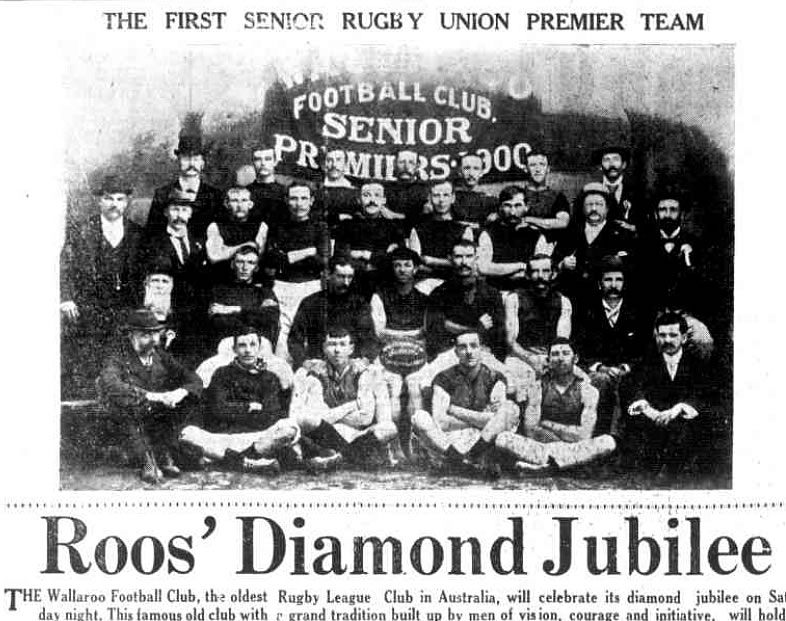
OUR CLUB LEGEND
Today’s club that wears the old town or suburban name, naturally inherits this whole layered and somewhat tangled history. That is not the issue. The real difficulty lies in how the club chooses to present that history – their rugby provenance.
There are two ways of looking at this.
One school of thought views the past with a kindly, half-closed eye and sees no great sin in allowing a later club to borrow the glory and dates of its predecessors.
The other — more forensic in nature — insists that if a club disappears from the field for any meaningful stretch (other than a world war) and then reappears, it is very likely not the same club at all, but a new one getting about in the old club’s football boots.
Yet, this kindly approach has real casualties. Historical accuracy is completely erased.
The hard work of mid-century communities who got rugby union up and going again gets entirely overshadowed by citing a 19th century year instead. Genuinely continuous rugby clubs lose their elite status. Arbitrary badge dates make actual survival look common rather than rare. Most of all, it obscures the code’s true story. It ignores the immense effort that went into resurrecting local or town rugby clubs.
The biggest “tell” of a rugby club’s true vintage is in its name—the earliest pioneers were solely an “FC” (Football Club), rather than “RUC” (Rugby Union Club) or “RC” (Rugby Club) and so on. Such as Sale FC, West of Scotland FC, Wallaroo FC and Hull FC. In Australia’s two colonies where rugby was the dominant code, the convention of naming a rugby club as just an “FC” prevailed until the end of the 19th century, perhaps longer in the regions. Conversely, in the other colonies these “FC” clubs are Australian rules clubs.
EARLIEST FOUNDED CLUB STILL PLAYING
The earliest founded rugby club in Australia still playing today is Melbourne FC (AFL) of 1858, which gave up rugby upon devising its own football rules in May 1859.* The next oldest is Sydney University FC (SUFC).
SUFC is recognised as the oldest existing rugby union club outside of Great Britain. However, as in the Home Nations, rugby historians distinguish a club or team formed within an educational institution such as a school, college or university—even if it plays against outside opponents—from a traditional rugby club of a town, suburb or other association of open membership.
Outside of the education bodies, the earliest formed rugby union club in Australia still playing today that has been ever-present—including during WWI—is actually found in rugby league: the Maryborough Wallaroos swapped codes in 1910 and celebrate their history back to their club’s founding in 1893.
Similar or even earlier claims could perhaps be made by other regional rugby league clubs* including the Yass Magpies and the older NSW Southern Highlands clubs Bowral Blues, Moss Vale Dragons and Mittagong Lions. The Yass club marks 1919 as its first year, but it appears to be a continuation of the Yass FC founded in 1878. The three Highlands clubs were all late 19th century rugby union clubs that switched codes en masse to form the Berrima District Rugby League in 1914. A similar story exists with the South Coast Rugby League and today’s Gerringong Lions, Jamberoo Superoos, Nowra Warriors and Kiama Knights. However, none of these clubs appear to have had continuous existence, particularly due to war, and most have shown little or no interest in any rugby union history there may be.
Of course, purists might argue that switching codes automatically rules a club out of the running anyway. However, present-day English “rugby” clubs like Hull, Wigan, St Helens, Leeds and Warrington would strongly disagree.*
OLDEST RU CLUB STILL PLAYING
Excluding schools, universities, and the non-competition years of 1915–18, no club has been continuously active since before 1920. The 1900-founded Sydney district clubs Eastern Suburbs and Northern Suburbs (originally North Sydney) have been ever-present since returning to competition after WW1 in 1920.
While the 1919 first-grade competition did feature an Eastern Suburbs side, this was the war era Newtown-Eastern Suburbs merged club, founded in 1917.* Meanwhile, the North Sydney club reformed for the 1919 season and played trial matches, but the NSWRU refused them entry into the premiership due to a lack of competitiveness. In 1920, Norths were finally admitted, as were Newtown and Easts after dissolving their merger.
Of the remaining 1900 foundation clubs, West Harbour (then Western Suburbs) also missed the 1919 season and was later excluded from the district competition from 1952 to 1961. Meanwhile, the 1915 Balmain-Glebe merger became permanent and was eventually renamed Drummoyne.
Other Sydney clubs citing a 19th-century founding. notably Petersham (1883), Hunter’s Hill (1892) and Mosman (1894), have not had a continuous existence, including at the Senior (men’s) level.**
SO WHO HAS THE OLDEST RUGBY PROVENANCE?
If, as it seems to be the case, we are going to be satisfied calling clubs and teams much older than they really are by relying on their rugby provenance and putting aside long gaps in existence, then who today possesses the oldest (earliest) rugby provenance?
You might naturally presume it to be the Sydney University FC, who say their students were first playing rugby in 1863. However, it is not SUFC. Nor the modern iterations of Goulburn (1872), Balmain (1873), Mudgee (1874) or Bathurst (1874).
The body with the oldest rugby provenance in Australia that is playing today is Hobart’s Christ College rugby team—affectionately known as the Black Pigs. Tracing the College’s roots back to when its first students played the game at Bishopsbourne in 1847, this hardy group of ruggers continues to take the field today in the University of Tasmania rugby competition.
[See: ‘Rugby Made its Aussie Debut in 1840s Tasmania‘]
The oldest game still played today is the annual meeting in Sydney between The King’s School and Newington College, which now forms part of the AAGPS NSW competition. This match is first recorded as being played in 1873, although both schools contend it was initially held in 1870.
See: OLDEST RUGBY RIVALS IN AUSTRALIA?
The first confirmed match under rugby rules in Australia was in Sydney in 1870 between Wallaroo FC and combined ‘Army & Navy’. The earliest outside of Sydney was Goulburn FC against Garroorigang in 1873. Garroorigang was a boarding and day school for boys located in Goulburn.
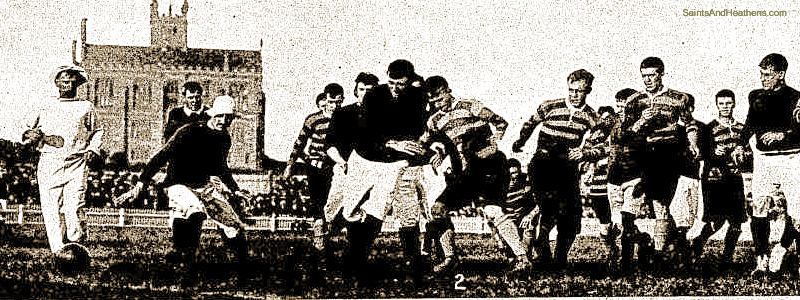
ONE CLUB’S HERITAGE, ANOTHER’S TANGLED MYTH
The Maitland Rugby Club (1877), claim they are the second oldest Rugby club in Australia, following behind Sydney University (1863). Yet the Goulburn club’s website sets out on its history page that it was founded in 1872.
The Parramatta club wears a badge with “1879” prominently displayed, both Mudgee and Bathurst record 1874 as their year of birth, Yass in 1878, and Randwick say their club began in 1882, Petersham and Gunnedah in 1883.
NSWRU EARLY CLUBS 1874-1880
The NSWRU (“Southern RFU”) came into existence via a series of meetings between the clubs in 1874. Not all clubs were represented at each gathering, but those in attendance at least once were: Wallaroo, King’s School, Newington College, Goulburn, Waratah, Balmain, St Leonards, Sydney University, Camden College School, Mudgee, and Victoria (South Sydney). Other Rugby-playing clubs that season (per the Town and Country Journal) included Bathurst and Maitland ‘Albions’.
At its 1880 annual meeting the NSWRU comprised: Albions (Maitland), All Saints’ College (Bathurst), Carlton, Balmain, Bathurst, Burwood, Glen Head, Goulburn, Grammar School, King’s School, Maitland, Newcastle, Newtown, Newington College, New School, Oaklands, Old King’s, Parramatta, Queanbeyan, Redfern, St Leonards, Tamworth, Toxteth, Sydney University, Wallaroo, Wallsend, Waratah, and Woollahra. Other towns known to have football clubs in the late 1870s included Dubbo, Murrurundi, Cooma, Singleton, Yass, and Tenterfield.

FROM CLUBS TO DISTRICTS (SYDNEY)
In the 19th century all of the Rugby clubs outside of the schools and University were membership-based clubs – you could join and play for any club you liked, so long as they would have you.
Each club had their own selection criteria for membership, and while some took on the name of a suburb, it didn’t automatically follow that just because you were a local that you would be accepted (or vice versa). Switching of talented players between clubs each year in Sydney was increasingly common by the mid 1890s. The first grade teams in 1899 were Buccaneer, Marrickville, Parramatta, Pirates, Sydney, Randwick, University and Wallaroo.
In 1900 the NSWRU (via the Metropolitan RU) did away with all the Sydney clubs, apart from the University, and established a “district scheme” that divided the city and suburbs following electoral boundaries.
This gave us the district clubs and three grades: Balmain, Norths, Wests, Easts, Souths, Newtown and Glebe; following boundary changes new first grade districts were created to provide entry for Sydney (1905), Manly and St. George (both 1906), and Randwick (1914).
Dissatisfied that they could no longer play with friends but were being forced to play for the team where they lived and be separated across the different grades, in 1901 a number of newly formed (or perhaps re-formed) clubs attached to a very localised area or one suburb, established a rebel competition that remained unaffiliated to the NSWRU, and later by a somewhat tortuous path became the City and Suburban Competition (‘Subbies’).
In time, and to counter the rival Suburban competition, the Sydney second and third grade levels of the district scheme became larger and different to that used in first grade, with additional/altered districts, multiple “borough” teams from the various suburbs within the same district, and teams that were not district based at all. The third grade had so many it was broken into two divisions, and was more commonly known as “the borough competition”. For example:
All the old districts (1907) have entered. The new districts are, in the second grade, Ryde, Gordon, Randwick, and Annandale; and in the third grade, so far, Sydney Training College, Randwick, and Mosman…The newly formed Randwick District Football Club, second and third grade MRU, will hold trial matches on Randwick Oval this afternoon. [The Sydney Morning Herald, 4 April 1908]
Sydney’s Petersham club, one of the handful that successfully navigated the 1900 cull, was ultimately disbanded by this latest rationalisation. Following the war, a revived Petersham club played in the lower grades, securing a third-grade premiership in 1923. Crucially, this was not the Petersham team that participated in the 1922 first grade competition (now Shute Shield) as this was actually the club who played 1919 as the Marrickville-Stanmore based Cambridge club and 1920-21 as a revived Newtown district club.**
While Hunters Hill RUFC (est. 1892) is often thought to have been ever-present, the club fielded no teams from 1897 to 1900 and operated as a juniors-only club between 1957 and 1965. Meanwhile, the present day Mosman club that cites a founding in 1893, was a new third grade club formed in 1922 from the previous year’s Cremorne juniors club. Advancing to the second grade in 1923, the new Mosman club won the first Kentwell Cup in 1923.**
There is no doubt with Rugby in Sydney the disconnect caused in 1900 by disbanding all the member-based clubs had its benefits to the growth of the code. It did though come at the price of losing tradition.
In comparison in London, where such a restructuring never took place, playing and supporting a club today could mean any of the now long-famous names in Rugby history of Blackheath, Richmond, Wasps, Harlequins and Saracens, as well as London Scottish and London Welsh, and dozens of other clubs from colleges, hospitals, military, and those founded in local pubs and associations.
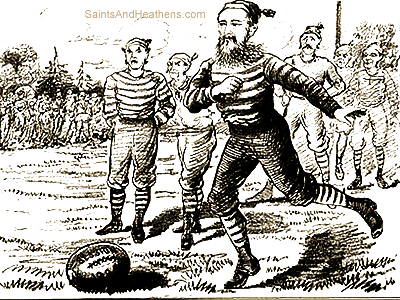
WHO’S ON FIRST?
Determining the order in which clubs were first established really depends upon what criteria one chooses to apply, or not apply.
Apart from the Sydney University club and numerous schools, and even putting aside the disruptions caused by wars, there is no Rugby club in Australia founded in the 19th century that has had a continuous existence ever since.**
NSW COUNTRY CENTRES
Most of country NSW and Queensland stopped playing Rugby during or just after WW1 – some areas started again in the 1930s, but many were not operating until the 1950s and ’60s.
Bathurst Bulldogs say they have a long history and were founded in 1874. In the early 20th century, Bathurst FC proudly stood as country NSW’s oldest rugby club. However, in early 1914 it was not able to hold out as rugby league swept through the western districts. In the late 1920s a ‘Bathurst Rugby Union’ was formed and a combined ‘Bathurst’ team, but none of its local clubs were named Bathurst. As the Central-Western representative scene devolved into an inter-town club competition, the modern day Bathurst rugby club first appeared winning premierships in the late 1970s.
The history of Rugby in Goulburn (1872) and in Queanbeyan (1877) is very similar – both became very powerful regions for the code in the late 1800s and early 1900s, at times had more than one local club, selected representative teams for games against other cities/towns, were practically non-existent between the World Wars, and were begun again in the 1950s. While the 1957 founded Goulburn RUFC (‘Goulburn Reds’) proudly claims “The Home of Country Rugby since 1872”, Queanbeyan RFC (‘Queanbeyan Whites’) are content with “Est ’54”.***
In the nearby town of Yass, the current Yass Rams RUC says it was founded in 1878, but the code was absent 1919-65, and it is likely claiming the history of Yass Magpies RLC. The original Yass FC was constant until WWI—even playing Melbourne University RFC in 1910 on their return journey home from Sydney. Significantly, of the very few matches Yass FC played during the war, these included rugby league games (in 1915 & ’18).***
In 1919 the Yass FC (or a new Yass FC) was a rugby league club and the amateur code extinct in the town. In the 1920s-30s the Yass FC came to interchangeably be called Yass RL club (now Yass Magpies). The first rugby union club in Yass since WW1 evidently arose in 1965, entering the ACT Rugby Union sub-district competition.
The Maitland RC (‘Maitland Blacks’) has “Rugby since 1877”, yet there are years pre-WW1 where there was no ‘Maitland’ club as the town had multiple cross-town clubs, a combined Maitland team making appearances from time-to-time in the 1920s-1950s, inter-mingled until the 1960s with periods where club football was not being played at all. The ‘Bowral Blacks‘ RC state they were founded in 1972, while the first Bowral club began in 1883, and in 1914 a club under that name switched to league, ending the town’s association with rugby union for the next sixty years.
Formed in 1961, the Mudgee Wombats claim to have been “Playing Rugby since 1874” and celebrated their 140th anniversary in 2014. Yet, rugby union was entirely non-existent in Mudgee between the 1920s and 1950s. The town’s original club left the NSWRU in 1876 through choice or extinction. While a Mudgee club joined the NSWRU in 1886, it was gone by the close of 1906. There were, of course, combined “Mudgee” representative teams, but they were not a club. An unequivocally new Mudgee FC was founded in 1908 and last played in 1913.
Two towns with ‘Red Devils’ clubs have very similar pasts from the 1880s to today, broken by a 30 year gap through the 1920s-1950s. The 1956-reformed Gunnedah Red Devils claim they were “established 1883” despite the decades-long gap. Meanwhile, the Cooma Red Devils, in the same circumstances, more sensibly celebrated “1963-2013: 50 Years.”
The Dubbo RC (‘Dubbo Kangaroos’) marks “est 1899”, though the club was founded in 1963. It says it was founded in 1899 as the Dubbo FC, however in 1913-14 seasons the only Dubbo FC was playing under rugby league. The 15-man code was not played in the city again until 1932. Various entities known as the Dubbo rugby union club came and went over 1932-36, 1940, 1950-57 and finally 1963.
The Walcha Rams’ claim of a long history and being ‘Established 1894’ obscures a fragmented timeline. The original 1894 club collapsed around 1901. A subsequent iteration arose through the 1920s, surviving votes to swing-over to league, but folded after 1930. The current club was founded in 1950, ending a two-decade gap with no local rugby union.
Today’s Kiama RFC was founded in 1961, but claims to be the re-established 1893 Kiama club. The last Kiama rugby union club was in 1913 and appears to be the Kiama Knights rugby league club, although they make no claim to any history before their debut in 1914.
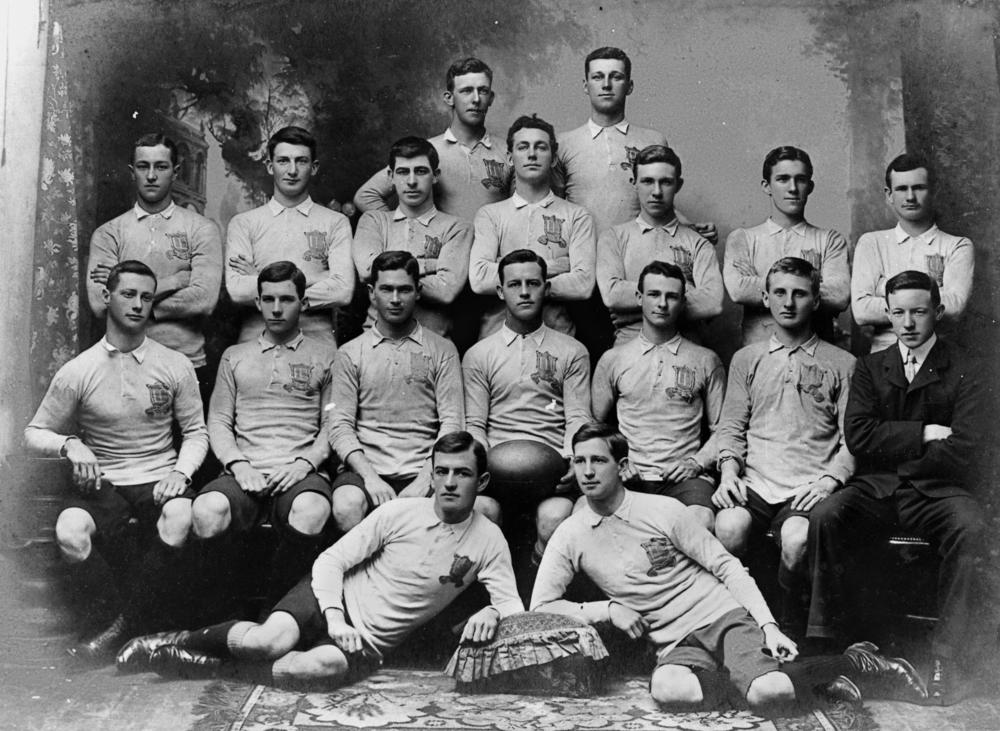
QUEENSLAND’S CODE-HOPPERS
In Brisbane the ‘Greater Public Schools Old Boys RUC’ (‘GPS Rugby’ Club) came into existence in 1931 when ‘The Past Grammar RUFC’ changed its name and rules to allow all former GPS students to join. ‘GPS Rugby‘ says it is “is one of the oldest clubs in Queensland rugby, tracing its heritage back to the Past Grammar club formed in 1887”. However, the ‘Past Grammars’ club that became ‘GPS Rugby’ had only been operating since 1929, when it took part in Brisbane’s first rugby union club competition since 1919.
The original ‘Past Grammars’ club (founded 1891) had switched codes after the 1919 season to become ‘Past Grammars RLFC’. In 1933 they formed the nucleus of the players, officials and club colours for the Northern Suburbs district club under Brisbane’s new residential rules – today they are ‘Norths Devils‘ and they do not claim any of the Past Grammars RLFC history other than as background.
Meanwhile Brisbane’s ‘Christian Brothers Old Boys RC‘ (est 1905) and University of Queensland RFC (est 1910) too have a 1920s era history as rugby league clubs. Brothers played league 1917-18 (as Merthyr FC ) and 1920-28. The University operated as a rugby league club 1920 to 1928, then fielded teams under both codes until the end of 1933. There were multiple inter-varsity games during the 1920s against the Sydney University rugby league team that played in the NSW premiership (now NRL).
Outside the Queensland capital the ‘Toowoomba Rangers‘ state that “The history of Rangers goes back to an era long ago, back to 1887 to be exact, making Rangers one of, if not, the oldest Rugby Clubs going around”. However when Rangers were founded in 1963, they were the city’s first Rugby club since 1912 (when the bulk of its players and officials left to start-up rugby league).
Conversely, the ‘Maryborough Wallaroos‘ have played in the 13-man game since 1910, but claim they are older than the code they play and “the oldest rugby league club in Australia”— being founded as a rugby union club in 1893 (formally in 1894).
VICTORIA’S SECRET
The Melbourne University RFC quotes a founding year of 1909, and while inter-varsity games vs Sydney were first held that year (not 1908), and again in 1910 and 1911, they did not continue and the last mention of the University playing in the local Melbourne clubs competition was in 1912. That the 1909 club died is reflected in the Arrow, 21 September 1923, stating “the movement petered out.” In 1923 a rugby league club was founded at the University and the following year it was granted full membership of the Sports Union. In 1926 this club swapped codes to rugby union, or a new University rugby union club was founded, where it has remained to the present day.
The Melbourne RUFC too marks 1909 as its foundation year, however there was no club between the end of 1914 and the start of 1926, and it merged in 1939 into a new club. There was in 1923-25 a ‘Melbourne Rugby League Club’, but the present day Melbourne RUFC does not mention that club and has not evidently been taken to be part of their history. In 1939 the 1926-38 Melbourne club merged with ‘Weary’ Dunlop’s former club ‘Old Boys’ where “the new club will play as Melbourne, but the uniform will be the black and white of Old Boys.” [The Argus 29.3.1939 & The Sun News-Pictorial 20.3.1939].****
Conversely, Melbourne club Boroondara Rugby Club (formerly called Kiwi Hawthorn RC), was created via a 1987 merger of the Kiwis RC and Hawthorn RC (originally Old Scotch RC). This merged club says it began in 1923 via the founding of the Kiwis RC when they were a rugby league club, and that they switched codes in 1926.
The limited contemporary newspaper reports from early 1926 indicate that the Victorian Rugby League body voted to swap codes and become the Victorian Rugby Union, and then each of the existing clubs duly followed in their own club rules. All three of the above clubs (Melbourne, Kiwi Hawthorn and University) were in 1923 started as rugby league clubs and all three (along with others) switched codes in 1926. Meaning all three have a shared founding year of 1923, or alternatively, all three were new clubs founded in 1926, although only the University today still exists outside of a merger.
THE SANDGROPER RUGGERS
Outside of the Australian mainland’s three east coast states, only Western Australia’s Cottesloe RUFC in Perth claims it was formed in the 19th century. Per their website they are the 1893 founded Pirates Club and in 1930 they moved to Harvey Field becoming the Cottlesoe Sea Gulls. This infers an unbroken lineage from 1893 to 1930, where there was none. The Pirates club existed 1893 to 1901 and again for one season in 1905. The code was not played in Perth after 1912.
In 1928 a WARU was formed with four teams (not clubs), none of which were called Pirates. In 1929 Cottesloe-Claremont RFC was founded at the Cottesloe Surf Life Saving Club and began playing locally in an all black kit with skull and cross-bones badge. While nicknamed the Pirates, there was no reference made in any reports of their club meetings to the earlier Pirates or their former players involvement, nor that any existing 1928 club (team) moved to Cottesloe. The club colours were changed to blue and the last newspaper reference to Pirates was in 1931. In 1993 the club made no mention of its purported centenary.
THE HARBOUR TOWN SHAKE-UP
Sydney’s Southern Districts RUC is a “new club” formed in 1989 by the amalgamation of St George (1906) and Port Hacking (1957). The Manly RFC started when “The Federals and Manly clubs informally merged in 1906 to form Manly DRUFC” in the Sydney first grade competition, though Manly had its first club in 1883, and were admitted to third grade in 1902 and second grade in 1903.
The Balmain RC (“re-established in 2005”) and Drummoyne DRFC (a WW1 merger that formed the Glebe-Balmain district club), both lay claim to the Balmain club formed in 1873, though it ceased playing in 1888, and another Balmain FC incarnation arose briefly in the mid 1890s. The latter club was founded in 1894, along with other new clubs at Glebe and Paddington, in an attempt (together with the existing Parramatta club) to have district clubs (i.e. residential-based teams) take over the Sydney competition. The initiative failed to take hold that year, but the “Paddington Electorate” club remained in first grade until 1900 when Eastern Suburbs District RUFC was formed at a meeting at the Paddington Town Hall,” chaired by the Mayor of Paddington, and adopted the Paddington club’s red, white and blue.
West Harbour RFC was founded in 1900 as Western Suburbs under the NSWRU district scheme. Dumped out of the first grade competition in 1952, its territory was given over to Parramatta, Drummoyne, and Eastwood. Wests re-entered via a new Second Division competition in 1962 and gained first grade status again in 1966 with its former area restored by the NSWRU once more realigning boundaries of existing clubs. There was no Wests district club 1952 to 1961. While during that period former Wests officials and players entered a side in Sub-Districts, this was not the 1900 Wests as a district club cannot logically exist once it is out of the district clubs competition.
In the 21st century as West Harbour the club adopted the ‘Pirates’ name, which apparently caused some consternation with the Northern Suburbs club, who claimed that Pirates was a name and mascot linked to their club.
Northern Suburbs club recounts on its history page that it was formed in 1900 from a merger of first grade clubs Wallaroo and Pirate, however this belies that they owe their existence to the new “district scheme” and only players resident in the electorate could take part.
The Pirates were a North Sydney based club, often called “the Shoremen” which was a name taged to all sports on that side of the Harbour. Not all of the Pirates players lived in the northern suburbs. Even less tenuous ties can be made to Wallaroo who had no playing or meetings connections to the area, but many of its older players and officials who founded the 1900 club did (as residents). There was no merger and the former Pirates and Wallaroos who lived on the south side of Sydney Harbour did not join the Norths club. The new club registered to play 1900 in jerseys using the colours of the district’s cricket club (green, cardinal & gold) and not a mix of the two old clubs.
The Parramatta and Randwick clubs of the Sydney first grade competition of the 1890s were made extinct by the 1900 district scheme of local clubs.
The boundaries map was re-drawn to create a Randwick first grade district in 1914 (one season) and again in 1923 (permanently), while Parramatta district was added in 1934. In 1973 “the Galloping Greens” of Randwick toured the UK to “commemorate the 50th anniversary of its foundation”. Today the club says “The Randwick District Rugby Union Football Club (RDRUFC) was established in 1882.”
The current Parramatta RC has 1879 on its badge and states “Parramatta Two Blues Rugby Club has enjoyed 130 years of top grade rugby in Sydney’s premier competition…Founded in 1879 as Cumberland…” (though 1879 newspapers all give the club’s name as Parramatta, and there was no senior Rugby in the town from 1900-1933).

CALLING TIME
What each of the above illustrates, whether they invoke a namesake club’s founding date and history or not, whether there are gaping holes in season chronologies or not, is that it is the very existence and legacy of the predecessor club, laid down in their community over decades, that has bred a later generation of people wanting to be part of bringing local Rugby back and choosing to celebrate its past. As ‘Amateur’ in The Cumberland Argus (26.10.1933) wrote in first suggesting Parramatta ought have a district club:
“Parramatta once occupied a proud position in the field of Rugby Union football, and its name is still linked with that code by the glory of the stars it once produced. Let us therefore…bestir ourselves and do something to regain that position by forming a club worthy of the highest traditions of Parramatta and Rugby Union football.”
While of course the utterly absurd founding dates of Australian rules clubs SUAFC and NCCAFC should be called out*****, football club histories, unless very recent, are not situations where forensic accounting and incorporation laws can or ought to be applied. In sport sentiment, enjoyment, celebration, camaraderie, remembering, and even boasting, matter just as much as historical accuracy.
Which is the only explanation one can offer for the NSW Waratahs “established 1874” branding and merchandise range. The NSWRU was founded that year to organise club football, and while the QRU has a formation date of 1883 and the NZRU in 1892, the first NSW, Queensland and New Zealand teams to play all share 1882 as their birth-date with the kick-off to representative Rugby.
Ironically, outside of the WW1 and WW2 years, the NSW team has uniquely taken the field every season since 1882, with only Sydney University FC holding a longer record. The NSW team though of course were not a club until the 1996 arrival of the Super Rugby era Waratahs.
© Sean Fagan
* (i) This same code-bending phenomenon applies to Canada. Modern Canadian football completely evolved from the England RFU laws adopted by the 1883-founded Ontario Rugby Football Union. This includes the current Canadian Football League (CFL) stalwarts, the Toronto Argonauts. Founded in 1873, they still wear their “double blue” colours derived from Oxford and Cambridge (like the NSW Waratahs). Because Canadian football did not fully break from rugby union rules until 1903, any 19th-century Canadian football club alive today actually began its life as a rugby union club.
* (ii) Football in Melbourne in 1858 was played under rugby laws [link], meaning South Yarra FC (defunct) and Melbourne FC (who say they were founded in 1858) must have been rugby clubs i.e. as the Melbourne FC did not adopt its first unique football laws until 17 May 1859.
* (iii) Another Queensland rugby league club, Rockhampton’s Fitzroy Gracemere RLFC (the Sharks), claims it began in 1886 as the Fitzroy Ramblers rugby union club. In May 1918 the Fitzroys and the rest of the Central Queensland RFU switched codes. The Fitzroy Gracemere RLFC though is a 2004 formed club from a merger of Fitzroys and senior section of Gracemere Cubs. Neither club were previously called the Sharks.
* (iv) “Last year’s Newtown Eastern Suburbs team will play under the title of Eastern Suburbs, the other name being too cumbersome.” See The Arrow 18 April 1919 & 9 May 1919.
** Hunters Hill RUFC (est. 1892) were one club thought to be ever-present, however it had no team in 1897-1900 and there is newspaper references to a Hunter’s Hill club playing again until in 1910 under the City and Suburban Association. However, the club’s website notes that “From 1903 onward we have photographs of a team in each year until the First World War”. The site also reports that the club only fielded junior teams 1957-65. [link] See The Cumberland Argus 1 May 1897 (“The Gladesville Club …will include Ryde and Hunter’s Hill players, both the latter places not running a team of their own this year”) & 9 April 1898 (“Hunter’s Hill football seems to be dead”).
** The Petersham club ceased playing in 1907 Borough competition and did not reappear until 1923 in third grade. The club named as Petersham that participated in the 1922 first grade competition (now Shute Shield) was in 1919 known as Cambridge (based at Marrickville-Stanmore) and in 1920-21 as Newtown District club.
** The 1890s Mosman club (or a new club) entered the Borough competition in 1902, which may be the same Mosman lower grade (Seniors) club that competed in 1919. However, the 1919 club was made defunct in 1920 by the introduction of a Mosman District club into first grade (Seniors / now Shute Shield), while at the same time a new multi-teams Mosman club was established in the Juniors. In 1921, the Mosman District club was absorbed into the neighbouring North Sydney (Northern Districts) club. At the start of 1922, the Cremorne Juniors club (founded 1920) entered the city’s third grade (Seniors) competition, renamed as Mosman. This club moved up the following season 1923 into the non-district clubs division of second grade (reserve grade), winning the inaugural Kentwell Cup. This Mosman club unsuccessfully sought admission into first grade in 1928 and is today a club in the New South Wales Suburban Rugby Union (‘Subbies Rugby’). See The Sun 14 May 1920, 15 March 1921, 7 March 1922, 13 March 1923 & 9 March 1928, The Daily Telegraph 7 April 1921, 17 April 1923 & 21 September 1923 and The Sydney Sportsman 5 May 1923.
*** Per The Sydney Mail of 13 October 1900, while there was in season 1900 an active ‘Goulburn’ club, it was not the town’s oldest club. Accordingly, the 1872 founded Goulburn club and the present Goulburn RUFC cannot be the same club (in addition to the many reasons given above in relation to rugby codes in Goulburn). At least twice during WW1 years Goulburn played Yass under rugby league (The Yass Courier, 27 May 1915 & 6 June 1918).
**** The ‘Old Boys’ club was founded in 1933 (as Camberwell), then in 1934 became a club for former scholars of the Associated Public Schools of Victoria and the University (Scotch College vs Melbourne Grammar match first played in 1932). Edward ‘Weary’ Dunlop played Rugby for the Melbourne University club until 1934 / after completing his studies and obtaining his medical degree he moved to the ‘Old Boys’ club playing the 1935-37 seasons, then in early May 1938 sailed to England for further studies/work; he was there when WW2 commenced and after military service finally returned to Melbourne in 1946. [link]
***** The Sydney University had a Victorian rules club from July 1887 to August 1889, and no club for 60 years until a new club founded in 1948, followed by a sporadic existence, yet states on its website “Founded in 1887…(SUANFC) holds the distinction of being the longest-standing Australian rules football club in New South Wales”. The Newcastle City club has on its badge and website “established in 1883”, that it was “Established in 1883, the Newcastle City Australian Football Club is one of the oldest … AFL clubs in the Hunter region,” and “140 Years Strong,” which are all at odds with a statement in The Maitland Daily Mercury on 2 May 1894 that “the old City Club…been dead years and years,” and no new club formed until 1948. The Wiki pages for these clubs SUAFC and NCCAFC at least chronicle their histories with some accuracy.


