Imagine the fervour for a Collingwood Magpies versus South Sydney Rabbitohs football match (or two!). Back-to-back games under each other’s rules. Would it be a fizzer? Or would the newspapers be beside themselves, the TV and social media noise deafening, and the gate enormous?
Story written & researched by Sean Fagan ©
Yet something not far removed from that scenario regularly occurred in the late nineteenth century. Before the codes dug in their heels and built permanent walls, football in Australia was a far more fluid affair. Clubs swapped rulebooks, colonial rivals tested themselves against unfamiliar laws, and touring sides happily turned out under whatever code paid the best gate. These were the heydays of cross-code footy.
How much does a match-up between the British & Irish Lions and the Sydney Swans appeal?
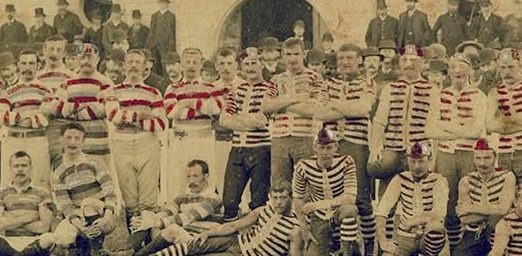
(Image courtesy of Port Phillip City Collection)
CARLTON FC vs WARATAH FC
The most significant of these early collisions occurred in Sydney in June 1877, with Melbourne’s Carlton FC (now AFL) meeting Waratah FC. The only football code being played in the NSW capital so far in the 1870s had been rugby.
“I believe the suggestion of a visit to Sydney emanated from the Carltons, and has been warmly taken up by the Waratahs. Any difficulty that might have arisen in regard to the rules under which the game is to be played has, I understand, been overcome by both clubs agreeing to play two matches, one under the rules existing in Victoria and the other under our rules.
“If such a meeting is to take place this season, the Waratahs had better be up and doing. To have any chance at all with one of the toughest clubs in Melbourne, it will be necessary to bring the cream of their players into the field, and have a fortnight’s hard practice before the exciting event comes off.”
— The Sydney Mail, 5 May 1877
On 23 June 1877 at the Albert Ground in Redfern, Waratah met Carlton in what stands as the first match between football teams from different Australian colonies (states). The game was played under rugby rules. Waratah, the stronger local side in the handling code, defeated the visitors.
Two days later, on 25 June, the same clubs lined up again—this time under Victorian rules. Carlton, far more at home in the open, kicking game, returned the favour with a convincing win. Crowds of several thousand watched both fixtures.
The following year the Sydneysiders repaid the visit. Waratah travelled south and again contested successive matches against Carlton—one under each code—at the Melbourne Cricket Ground (MCG). The rugby match ended in a controversial draw, decided by a home-town umpire, while Carlton prevailed under Victorian rules.
A number of the Waratahs became enamoured with the Victorian code, and a few seasons later their entire club permanently switched.
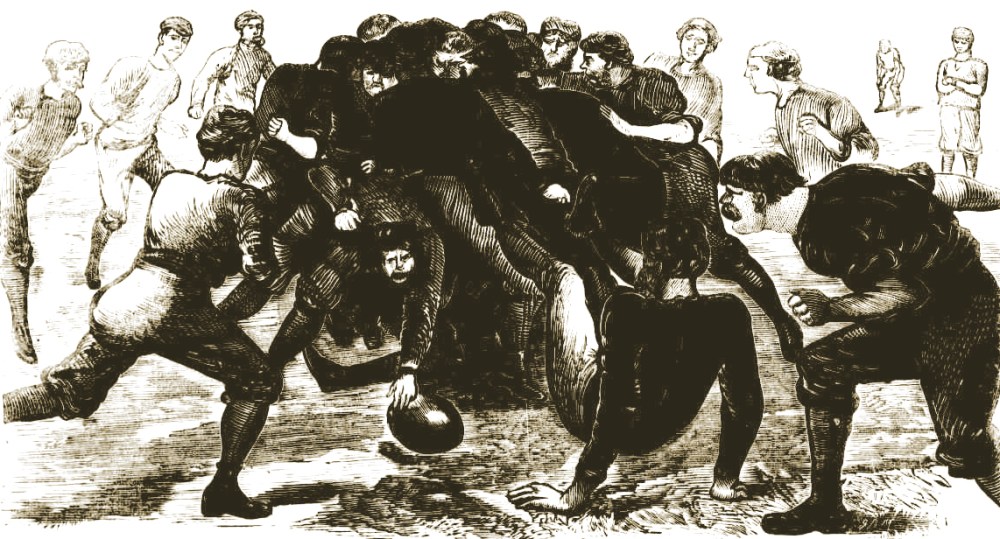
Australian Town and Country Journal 30 June 1877
SYDNEY UNIVERSITY FC vs MELBOURNE FC
Not every ambitious proposal reached the field. In 1878 the rugby-playing Sydney University FC entered negotiations with Melbourne FC for a similar exchange to Carlton-Waratah. The students though withdrew once they realised that, as hosts, they would bear the full financial risk of travel and accommodation if the venture lost money.
NSW WARATAHS vs QUEENSLAND REDS
There was a distinct cross-code flavour to the first rugby contest between NSW (now the Waratahs) and Queensland (now the Reds), played at the Sydney Cricket Ground (SCG) on 12 August 1882. The visiting XV had been drafted from the rugby-minded players within the top Brisbane and Ipswich Australian rules clubs. The Northern Rugby Football Union (now the QRU) and its first official rugby teams were not formed until late 1883.
WALLAROO FC vs WANDERERS FC
In 1887, Wallaroo, Sydney’s pioneering rugby club, stepped outside its usual laws to meet the Wanderers, Australia’s first organised soccer side. Played at Moore Park, the match was played under the Wanderers’ round-ball rules. The rugby men were beaten 6–2, yet several showed they understood the dribbling game better than pure theory suggested. [Link]
The biggest experiments came with the international rugby tourists of 1888–89, the first British Lions and the New Zealand Natives team.
THE BRITISH LIONS vs PORT ADELAIDE FC (and other matches)
The first British Isles rugby team played nearly twenty matches under Victorian rules while in Australia. They won half a dozen of these games, mainly against country centres. Their most notable victory came on 10 July 1888 at Adelaide Oval, where they defeated Port Adelaide FC (now AFL) by 8 goals to seven.
The tourists drew large crowds in the bigger centres, suffering a heavy defeat to Carlton before 25,000 at the MCG. They also met Essendon FC, Fitzroy FC and South Melbourne FC (now Sydney Swans).
THE NEW ZEALAND NATIVES TEAM vs SOUTH MELBOURNE FC (and other matches)
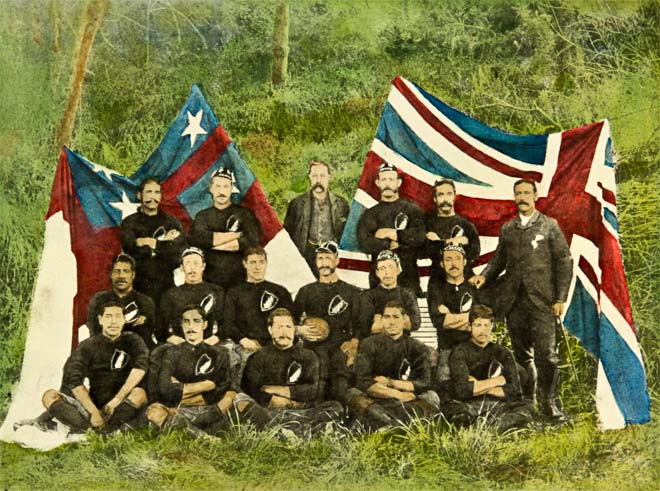
In the winter of 1889 the New Zealand Natives tourists contested Australian rules fixtures after their long British tour. Among their better results was a 30 May 1889 win over South Melbourne FC by 6 goals to four. The Natives also played matches against Carlton FC, St Kilda FC, Essendon FC and Fitzroy FC.
They also crossed over at least twice to take part in two Association football (soccer) matches in the Newcastle Hunter Valley region (losing both).
ALL GOOD THINGS
These late 1870s and 1880s cross-code games were pragmatic rather than ideological. They demonstrated that the codes were still close enough for skilled players to switch, and that colonial rivalries could temporarily override rule-book differences.
Only later did the great divide harden, with rugby consolidating in NSWales and Queensland, and Victorian rules dominating the south and west.
HOORAY FOR CAPTAIN SPALDING!
In the end, was all of this mere circus football—an over-reach by money-chasers? Well, maybe. For the most part, each side left more firmly convinced that their own code was superior.
But it was also the spirit of the times.
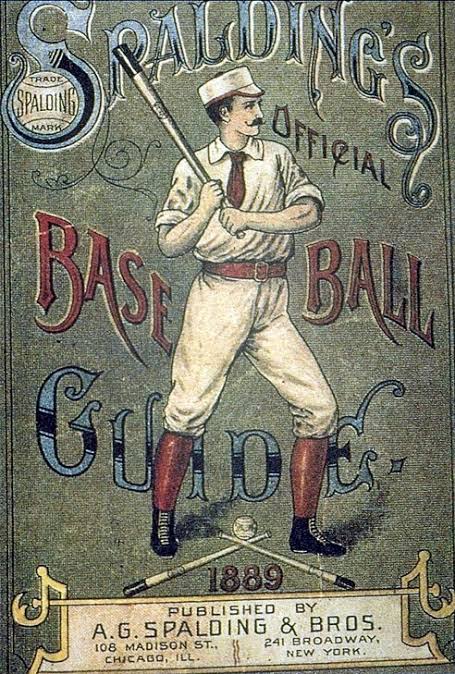
There’s no other way to explain how Al Spalding thought 18 of his American baseballers taking on a NSW XI in a game of cricket at the SCG in December 1888 would be a winner.
© Sean Fagan.