
This page provides a curated chronological list by founding year of known open rugby clubs from throughout the world as at the formative time up to and about the establishment of the Rugby Football Union (RFU) in London in 1871, and the close of that calendar year.
It correctly prioritises clubs whose membership was open (i.e. community/non-institutional clubs) and excludes the teams of a school, university, hospital, or similar institution, or ‘old boys’ thereof.
The list has been prepared with the greatest care and attention, but may not be complete, nor necessarily free from debate and contention.
The convention of using “FC” for club names in the formative era was because they were a football (in the broad use of the word) playing club, irrespective of what playing rules were being used. Some clubs played by different rules on alternate Saturdays.
The term “rugby union” to describe the game did not come into being until after the formation of the RFU. It did not immediately impact the continued practice of naming rugby-playing clubs as “FC”. The first distinctions began to arise where a city or town already had a
Story written & researched by Sean Fagan ©
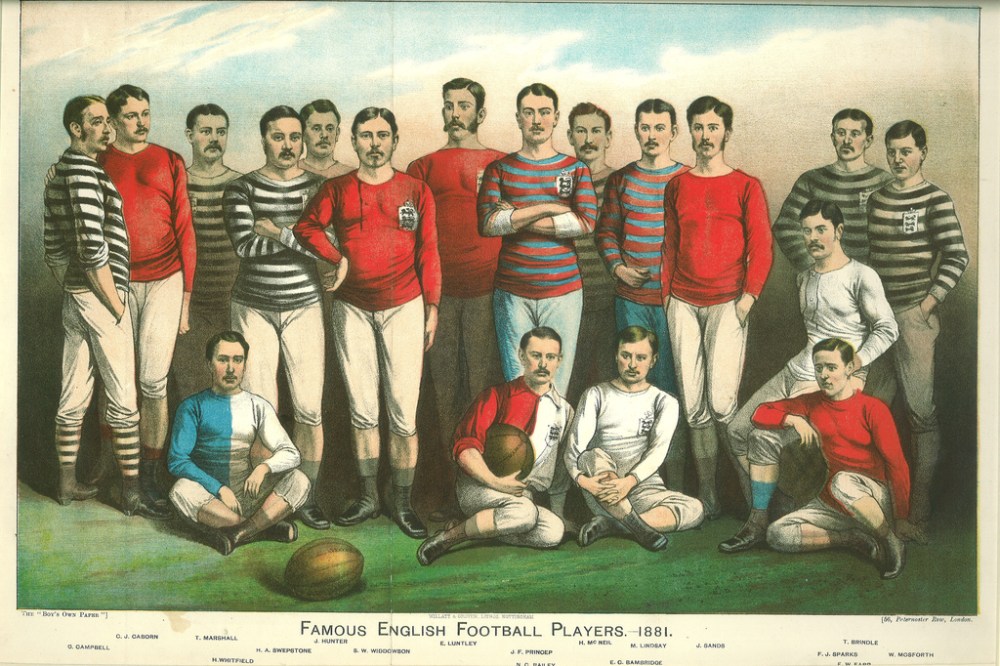
RUGBY’S FIRST CLUBS: A COMPENDIUM, 1857-1871
| Year | Club Name | Country / Region | Key Historical Context & Notes |
|---|---|---|---|
| 1857 | Liverpool FC | 🏴 England | Recognised as the world’s first open community rugby club. In 1986 merged into today’s Liverpool St Helens FC. |
| 1858 | Blackheath FC | 🏴 England | The oldest independent open club in continuous, unbroken existence. |
| 1860 | Manchester FC | 🏴 England | Formalised in 1860, is now Manchester Rugby Club. |
| 1861 | Sale FC | 🏴 England | Pioneering club anchoring community rugby in Greater Manchester. |
| 1861 | Richmond FC | 🏴 England | Formed as a suburban open side; later became a core pillar of the pre-RFU structural era. |
| 1863 | Civil Service FC | 🏴 England | RFU founder member. Open to civil servants (profession-linked but not a closed institutional side). Still exists today as CS Stags 1863. |
| 1865 | Bath Zouaves | 🏴 England | A very early established open rugby club in the West Country. Later formally named as Bath FC, though the exact year isn’t clear. |
| 1865 | West of Scotland FC | 🏴 Scotland | The oldest conventional open town/community club north of the border. |
| 1865 | Ravenscourt Park FC | 🏴 England | Short-lived open London club (many early players Old Rugbeians but membership not restricted). RFU founder. Disbanded c.1878–80. |
| 1865 | Wimbledon Hornets FC | 🏴 England | First recorded match October/November 1865. RFU founder. Continues today as Wimbledon RFC. |
| 1866 | Harlequin FC | 🏴 England | After members split that formed Wasps FC, in 1870 the club re-named from Hampstead FC to Harlequin FC. |
| 1866 | Flamingoes FC | 🏴 England | Based at Battersea Park, this club was one of London’s more sought after opponents for fixtures, but lasted only a decade before disbanding. |
| 1867 | Wasps FC | 🏴 England | A major London suburban open club; notoriously missed the 1871 RFU founding meeting due to a pub venue confusion. |
| 1867 | Lausanne FC | 🏴 England | One of the rare dual code clubs, it gave up soccer not long after joining the RFU at its foundation. Based around south-east London, the club faded away in 1881. |
| 1867 | Twickenham FC | 🏴 England | Established the sport in the community that would later become the historic home of English rugby. |
| 1867 | West Kent FC | 🏴 England | Open suburban club initially playing both football codes. RFU founder. Ceased playing rugby c.1886. |
| 1867 | Bradford FC | 🏴 England | Perhaps founded earlier, was one of the premier fixture choice clubs under the RFU until switching to rugby league in 1895. |
| 1867 | Queen’s House FC | 🏴 England | Based in Greenwich in London, the club’s name derived from the former royal residence Queen’s House. A formidable club from the outset, once its coterie of respected playing talent began to fade, in 1883 it evidently chose disbandment over deterioration. |
| 1868 | North of Ireland FC | 🇮🇪 Ireland | The oldest open rugby club on the island of Ireland. Merged in 1999 to form Belfast Harlequins. |
| 1868 | Kilmarnock FC | 🏴 Scotland | Switched to soccer in 1873, with the disaffected rugby members forming a new club, which today is the Kilmarnock RFC. |
| 1868 | Edinburgh Wanderers FC | 🏴 Scotland | Initially known as St. Andrew’s (University) Wanderers, it was an open club from the outset. Now merged as Murrayfield Wanderers FC. |
| 1869 | Preston Grasshoppers | 🏴 England | Uniquely did not adopt a ‘FC’ appendage to the club name. Revived as practically the only RFU club in Lancashire during the post 1895 rugby league founding era. |
| 1869 | Clapham Rovers FC | 🏴 England | A dual-code football club played both rugby and soccer. association rules. Failed to reappear after the First World War. |
| 1869 | Mohicans FC | 🏴 England | Club on the northern side of London lasted around five seasons. |
| 1869 | Hamilton FC | 🇨🇦 Canada | This rugby-founded club in Ontario set in train a lineage to today’s Canadian Football League as the Hamilton Tiger-Cats. |
| 1869 | Addison FC | 🏴 England | A short-lived open membership club in Kensington. The area the club drew from had streets named around British writer and politician Joseph Addison. |
| 1870 | Wallaroo FC | 🇦🇺 Australia | Sydney and Australia’s first dedicated rugby club. Played until force-dissolved in 1900 in favour of the city’s residential-based clubs and “district scheme”. |
| 1870 | Ipswich FC | 🏴 England | Established as an open town rugby club in East Anglia. In 1888 merged and became a soccer club Ipswich Town FC. |
| 1870 | Hull FC | 🏴 England | Founded in 1865 and adopted rugby rules in 1870. First rugby club from Yorkshire to join the RFU, left in 1895 becoming a rugby league club. |
| 1870 | Wanderers FC | 🇮🇪 Ireland | Dublin-based open rugby club, remains oldest such club in the Republic of Ireland. |
| 1870 | Belsize Park FC | 🏴 England | This local club based in Hampstead in London failed to see out the 1870s. |
| 1870 | Nelson FC | 🇳🇿 New Zealand | Formed as a town club in 1868 playing hybrid rules, then in 1870 adopted Rugby School rules. |
| 1870 | Burton FC | 🏴 England | Based in Burton upon Trent in Staffordshire. Club continues to play today as Burton RFC. |
| 1870 | Halifax FC | 🇨🇦 Canada | The Maritimes’ first, but short-lived, rugby club—the country’s last rugby devoted region, holding out against Canadian football until WW2. |
| 1870 | Wellington FC | 🇳🇿 New Zealand | Remains today New Zealand’s oldest continuous rugby club since its inception. |
| 1871 | Ealing FC | 🏴 England | Formed in West London, is now Ealing Trailfinders Rugby Club. |
| 1871 | Rochdale Hornets FC | 🏴 England | From what is now within the Greater Manchester area, this Lancashire founded club changed codes in 1895 to rugby league. |
| 1871 | Worcester FC | 🏴 England | Founded as a completely open, non-institutional town club. Provides a rugby provenance for present day Worcester RFC and Worcester Warriors. |
| 1871 | Streatham FC | 🏴 England | Expanded the fast-growing South London suburban open-club network. The club was defunct six years later. |
| 1871 | Neath FC | 🏴 Wales | Historically recognised as the oldest open community club in Wales, and per the club’s website it may have been in existence as early as 1864. |
| 1871 | Langholm FC | 🏴 Scotland | Formed as a community town side, laying deep roots in the Scottish Borders rugby heartland. |
“Those who play the rugby-type game should meet to form a code of practice as various clubs play to rules which differ from others, which makes the game difficult to play.”
— Edwin Ash (Richmond FC), letter published in The Times, 4 December 1870
Footnote 1: Founding Clubs of the RFU (1871) not included in this list
Of the 21 clubs represented at the inaugural meeting of the RFU on 26 January 1871, the following are not listed above because they do not (or did not prior to 1872) meet the strict “open club” criterion used for this compendium i.e., membership was restricted to a school, hospital, university, profession, or old-boys group, or the club was otherwise institutional rather than a true community/open side:
- Guy’s Hospital – hospital-based
- King’s College Hospital – hospital-based
- St Paul’s School – school side
- Wellington College – school side
- Law Club – restricted to members of the legal profession
- Marlborough Nomads – primarily an old-boys club for former pupils of Marlborough College
- Gipsies FC – an old-boys club of Tonbridge School in Kent
The table includes the RFU founding clubs who indisputably were open membership clubs (Blackheath, Richmond, Harlequins, Civil Service, Ravenscourt Park, West Kent, Wimbledon Hornets and Clapham Rovers), and those who, in the absence of any identifiable ties to an institution, are also presumed to be an open club (i.e. Addison, Belsize Park, Flamingoes, Lausanne, Mohicans, Queen’s House).
Although many of the men present were Old Rugbeians, Rugby School itself was not represented at the meeting and therefore not a founder of the RFU.
Footnote 2: Football clubs in Victoria, Australia, prior to 1859
The first rules of what would become Australian rules (Victorian rules) football were devised by the Melbourne FC on 17 May 1859. These rules were adopted in 1860 by other clubs. It is likely all of these clubs, including Melbourne FC, prior to this had adopted a form of Rugby rules. These clubs include South Yarra, St Kilda (not the present day club), Richmond, Williamstown, Collingwood (not the present day club), Boroondara and Geelong. [Link]
Footnote 3: Rugby league clubs
Leeds Rhinos began in 1870 as Leeds St John’s FC, however it was initially a closed church member based club until widening into an open club later in the decade.
Huddersfield Giants cite a founding year of 1864 based on a lineage from the Huddersfield Athletic Club’s football team. However, in 1875 this entity merged with St Johns Cricket Club to form the Huddersfield Cricket and Athletic Club. Emerging from this is the rugby club which is now Huddersfield Giants rugby league club. Accordingly, the claim of a 1864 founding remains unconvincing.
Footnote 4: Chicago FC of 1873 (rugby clubs in the USA)
The USA had a weaker tradition of football clubs outside of educational institutions compared with Britain and its colonial established countries. The social impacts of the Civil War (1861-65) and its recovery may also have delayed development of interest, and baseball captured much of the organisational energy for team sports.
The earliest open (non-college) club with a rugby-type set of rules was very likely Chicago FC (organised in the 1873–1875 period), who in 1876 met the Northwestern University team (now the Wildcats) in Illinois. During this same period the Eastern colleges adopted rules essentially those of London’s RFU, formalising in 1876 as the Intercollegiate Football Association. [Link]
Although none make prominent use of “FC”, a handful of today’s NFL teams are under their registered legal name a football club, including the Dallas Cowboys Football Club, Ltd.
Footnote 5: Sydney, Australia prior to 1870
The handful of clubs that existed in Sydney between 1865 and 1868 had adopted Australian rules or a variant thereof. The Sydney University FC, which cites 1863 as its founding year, is not listed in the table above as it was the team of an education institution and not an open club, and in any event did not formalise into a club until 1871, and there is no evidence of its teams playing anyone under rugby football rules until 1870. [Link]
Footnote 6: In New Zealand 1860s
The current day Christchurch FC was founded in 1863, however it played football under various forms of playing rules. The club adopted the RFU playing rules in mid 1870s. The Nelson FC was created in 1868, changing to rugby in 1870.
WHEN IS A RUGBY CLUB A FOOTBALL CLUB?
The biggest “tell” of a rugby club’s true vintage is in its name: the earliest pioneers were named simply “FC” (Football Club) rather than “RUC” (Rugby Union Club), “RC”, “RFC”, and so on. For instance, see Sale FC, West of Scotland FC, Wallaroo FC and Hull FC. Even in North America, this convention applied when the rugby-playing Chicago FC adopted its name in c.1873.
As pointed out at the top of this page, the term “rugby union” to describe the game did not come into being until after the formation of the RFU. It did not immediately impact the continued practice of naming rugby-playing clubs as “FC”.
Contrary to the belief of many, the use of “FC” for rugby clubs did not cease upon the formation of the RFU in 1871. A notable example is Leicester FC in 1880.
The first distinctions began to arise where there was already a city or town “FC” in one code, and another club wanted to use the city or town name too, leading to “AFC” and “RFC” or other variants. In time, soccer clubs took any opportunity to replace “AFC” with “FC”, and rugby clubs gave up on football to become “RC” or “RUC”.
In the Australian colonies of NSW and Queensland, where rugby was dominant, the convention of naming a rugby club simply as “FC” prevailed until the end of the nineteenth century, and possibly longer in regional areas. In Goulburn in the 1890s, the flag of the local Wallaroo rugby club had W.F.B.C., implying it was a Foot Ball Club (perhaps the flag was a well-intentioned gift).
Even beyond that era, in Sydney the “FC” was retained on the end, such as today in the NRL where the 1908 founded Rabbitohs are formally the South Sydney District Rugby League Football Club (often shortened to “South Sydney Football Club” by the organisation itself), and in the city’s Shute Shield rugby clubs (Eastern Suburbs District RUFC, Randwick DRUFC, Northern Suburbs RFC).
Conversely, in the other Australian colonies, clubs named “FC” were typically Australian rules (now AFL) clubs.
© Sean Fagan.

