
Story written & researched by Sean Fagan for SaintsAndHeathens
Anyone gazing upon a major game of rugby for the first time is likely to presume those uniformed and sometimes wet and muddied young boys and girls parading up and down the touch-lines, footballs tucked under their arms like precious loaves, are a quaint relic of the sport’s birth in Victorian England—survivors sustained by some secret loophole in the child-labour laws.
The fancy is picturesque, but only half true.
The English writer Charles Dickens had already made famous the miseries of the boy chimney-sweeps—those poor climbing boys thrust up narrow flues like so many human pipe-cleaners. Parliament, stirred at last by conscience and public outcry, declared the worst of it illegal in 1840.
Yet at that very hour, in the green playing-fields of Rugby School and its imitators, other lads were being dispatched on less perilous but equally urgent missions. When the lone football sailed over the boundary into heath or hedgerow, the older boys would order the youngest to fetch it back.
In the late-Victorian club game, now played by grown men, usually only one football was on hand. Even if others lay about, only one was accepted as the ball for that day’s combat.
Kicking the ball deliberately out of bounds into the nearby bramble and thicket or open pastures, became a recognised art: forwards gained a precious breather after the rucks, runs and scrums, or a side ahead on the score could waste the remaining minutes until “no side” (full-time) was called at sunset.
Practical, even customary, but not exactly sporting.
It is likely the first ball-boys were under the command of the team’s captain. Young boys who enthusiastically wanted to volunteer their services to take part in the game and to be in the company of the footballers. A nod to indicate Go! if the ball was needed, a shake of the head if it was to be left idle wherever it was resting or hiding.
In 1893, according to a later report in Sydney’s Daily Telegraph, a Brisbane ball-boy chased a kick from the visiting New Zealanders (now All Blacks) over a boundary fence into the neighbouring houses, only to return empty-handed—the ball having been souvenired by the locals.
The same role existed at the Sydney Cricket Ground (SCG) in the early 1900s. Young boy Reg Fusedale performed the duty a decade or more before growing into a stalwart with South Sydney’s original district club in union and later St George in league. These boys became familiar faces and favourites with the crowds.
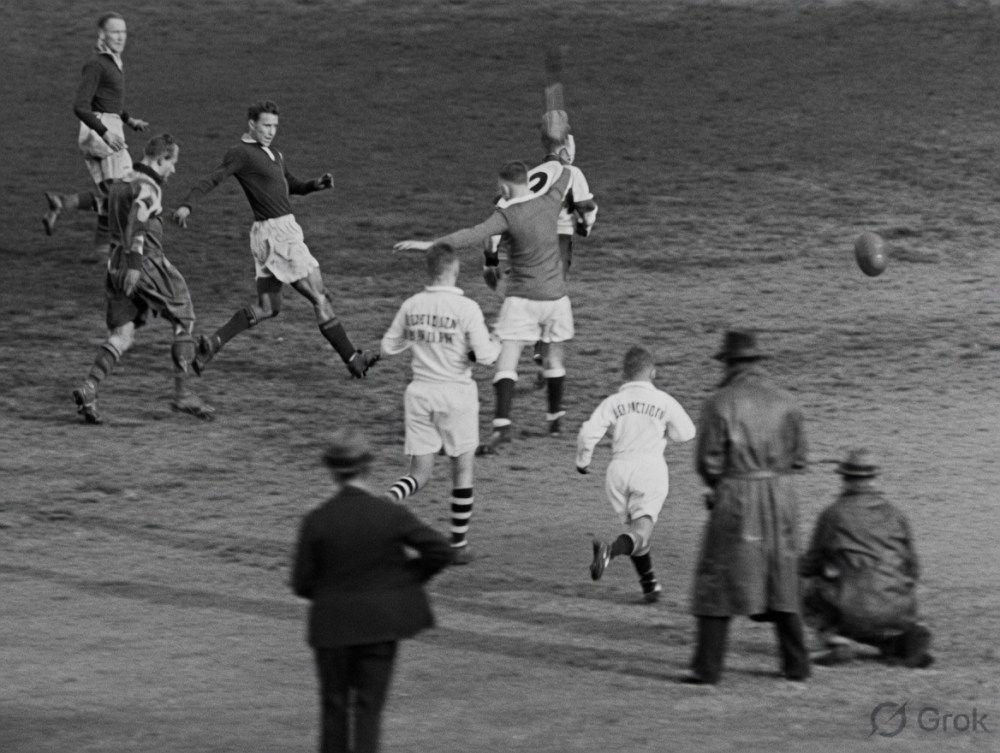
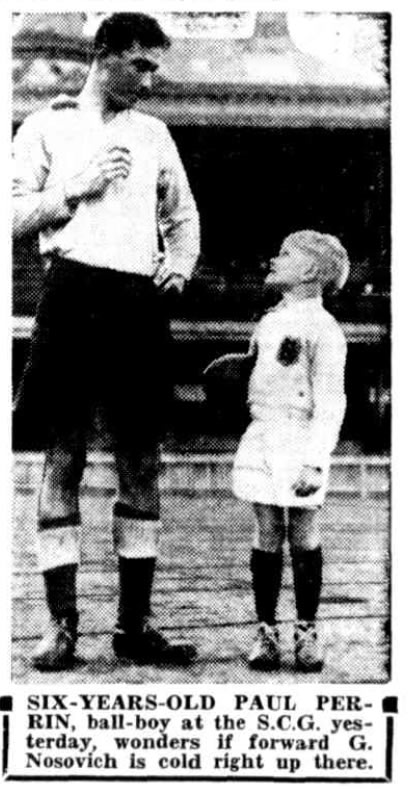
By the 1920s-30s, at the big crowd-drawing fixtures of both codes at the SCG, and then in first grade club football, the old leisurely ways met their end. Time-wasting by punting the ball into oblivion would no longer be tolerated.
Each touch-line acquired its dedicated ball-boy, smartly turned out in team colours, marching beside the touch judge like a junior adjutant. Three balls were now in commission: one in the fierce heart of the contest, and one held ready by each attendant. The moment the leather crossed the line, a fresh ball flew in from the ball-boy and play rolled on without pause, while the youth scurried off to recover the wayward ball.
Thus did necessity and larger gates transform the ragged urchin of Victorian times into the trim, professional servant of the modern game.
Other tasks were sometimes called upon, such as removing a rugby-loving canine to outside the fences. In some territories carrying out a small bucket containing mound-building damp sand or other dirt or soil for the old toe-poker goal kickers (“sand boys”).
In 1939, at a rugby union game at North Sydney Oval between Northern Suburbs and Eastern Suburbs, the sound of the half-time bell rang out. The referee blew his whistle and both teams trooped off to the dressing rooms. Moments later, the timekeeper appeared alongside the ball-boy, who explained that he had accidentally turned bell-ringer by kicking the game bell. There were still ten minutes left to play. The teams went back out and played on until the real half-time break. (Knowing Norths, it is more likely the boy caught his leg on their too-close-to-the touchline portable time-keeper’s table!)
No doubt some self-appointed reformer among the kill-joy crowd is already hunched over their keyboard, preparing to portray the life of the modern rugby ball-boy and ball-girl as every bit as exploited and unhealthy as that of the chimney-sweep.
One day, perhaps soon, this active role too will be banished from the field. As extinct as the news paper-boy. They will be relegated to watching from the stands or a screen—another innocent tradition sacrificed to the onward march of the truly sooted.
© Sean Fagan.
Ball-boys are visible in this film below of 1930 match at the SCG between the Wallabies and the British Lions.

