
A charming nod to a forgotten piece of wedding day history—the bride taking a football kick!
Story written & researched by Sean Fagan ©
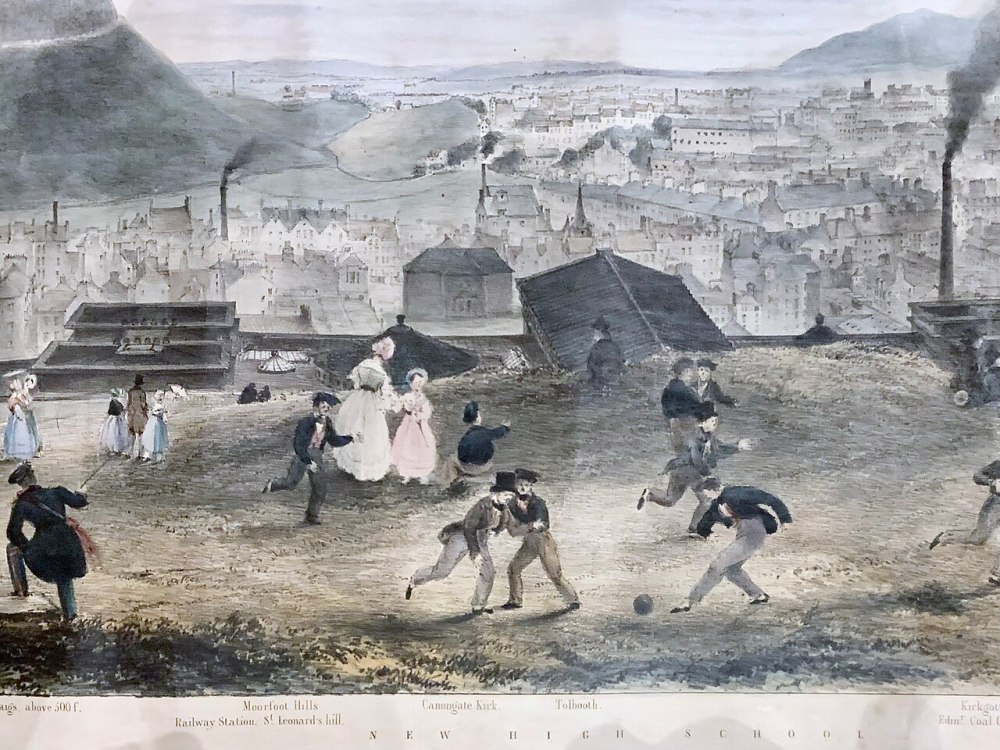
“Am I so round with you as you with me,
That like a football you do spurn me thus?
You spurn me hence, and he will spurn me hither:
If I last in this service, you must case me in leather.”
— ‘Comedy of Errors’, William Shakespeare (c.1594)
The happy couple left the church to the sweet strains of Mendelssohn’s Wedding March. Pretty baskets of flowers were emptied along the bride’s path, floral horseshoes and rice showered down as they reached the carriage.
And then, just outside the porch, came the unmistakable thud of a football kick.
We all know how men love their football. Couples today carefully check the fixture list so the big day doesn’t clash with a crucial match or grand final.
Yet while we often picture nineteenth-century weddings through the soft, romantic lens of the Brontës’ football-free novels—quiet parish churches, delicate muslin dresses and poetic countryside—the reality for many brides was far more lively. Some were even invited to make the football the kick-off to married life!
The football was right there in the middle of the celebration.
And the custom was older and more widespread than most of us realise.
From at least the fifteenth and sixteenth centuries, newly married freemen in places famed for their Shrove Tuesday (“Pancake Tuesday”) revels—Dublin, Chester, Perth and Corfe Castle among them—were required to present a football (or money for one) to the town, guild or magistrates.
The local churchyard was usually the starting point for these street football medieval football games. The goals were a prominent place or building miles away from each other.
It was a ball-carrying and player-kicking (and much else) game. The untamed ancestor of Rugby School football.
The two sides “in a pitched battle” could be town against country, or other mixes, and “wives vs. maids”, where it was “married and unmarried women, in which the former were always victors”.
In the Tudor town of Chester the ritual was more theatrical: the shoemakers offered a leather football, the saddlers a decorated wooden ball, and each newly married man presented a small silk or velvet ball.
These balls were tossed up for the crowd to scramble after, turning the couple’s tribute into the centrepiece of the day’s public fun.
By the eighteenth and nineteenth centuries the wedding and football tradition had taken on many forms. In the North of England a cheerful (if determined) party would wait outside the church to demand “football money”—a claim that, according to the antiquarian John Brand, “admits of no refusal.” Brides sometimes handed over “ball money” to their childhood friends.
In another local variation, a football was simply placed at the bride’s feet as she left the church. Her new husband invited her to give it the first kick of married life—a playful way of launching their shared future together.
In Normandy the bride herself, if she could, kicked or threw a football over the church roof for the men to scramble after before everyone danced. It feels like a forgotten cousin of the modern bouquet or garter toss, only with rather more athletic flair.
Even the most respectable weddings joined in. At a grand country wedding in Boldon in 1844, the village football was gaily decorated with white ribbons, and duly kicked by both the bridegroom and the bishop. The crowd cheered, silver coins flew, and the church bells rang out.
Of course not every wedding custom involved a ball.
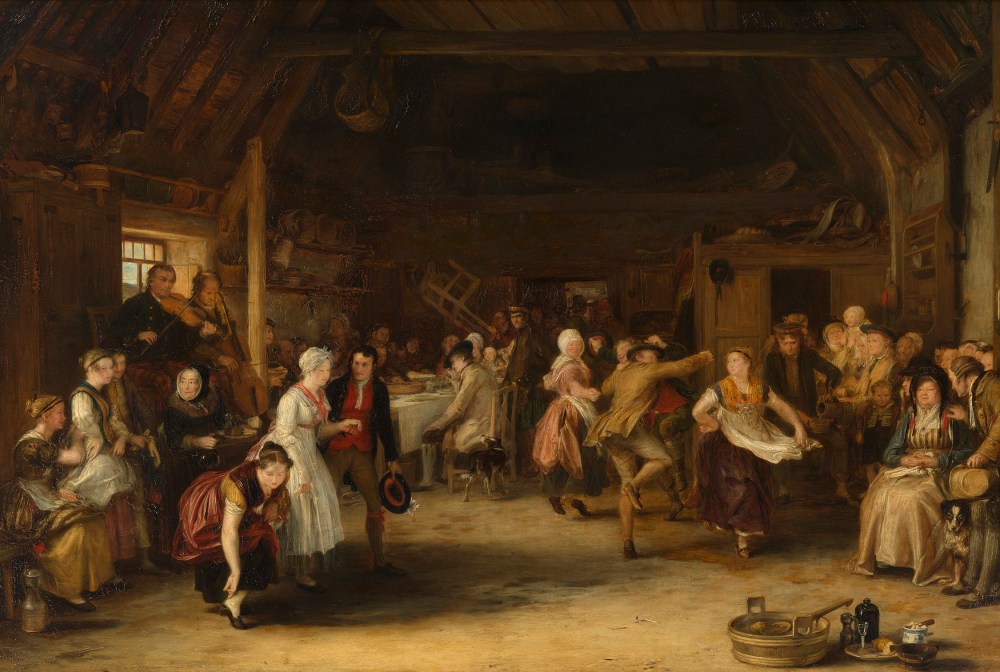
The much-loved “penny wedding” took the opposite approach: every guest contributed a penny (or food, drink and music) so the feast was truly communal, with any leftovers helping the newlyweds set up home.
It was the original crowd sourced celebration—joyous, inclusive and captured forever in David Wilkie’s famous 1818 painting.
As organised club football grew in the late nineteenth century, the old church-gate customs gradually faded. Footballers usually retired upon marriage to protect the family income from the risk of injury, and the game became more of a bachelor pursuit.
Yet the underlying idea remained: the community had a stake in a couple’s new beginning, celebrated with a joyful kick.
Some traditions really do deserve a second half.
© Sean Fagan.


